
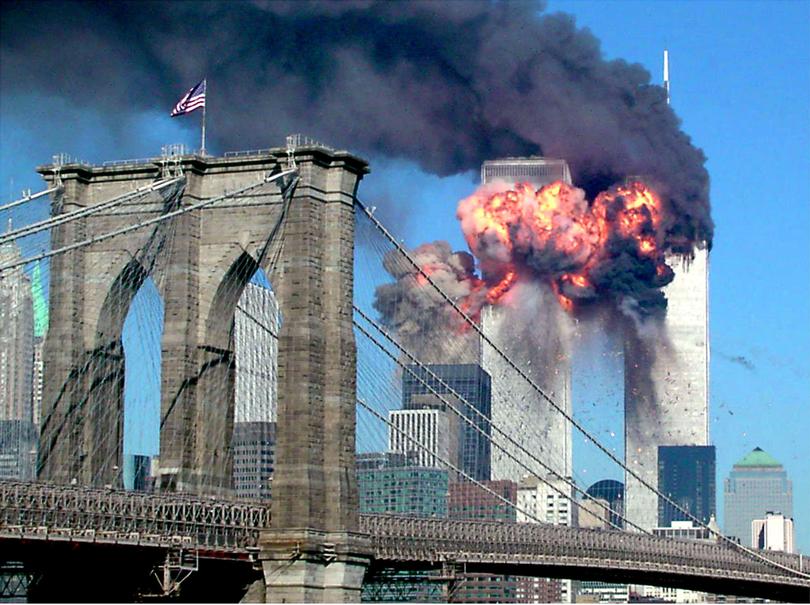
September 11th, 2001, was undoubtedly the most influential day in American history during the 21st century. From a change in governmental structure to the transformation of foreign policy, the landscape of our nation would be forever altered by the actions of al-Qaeda and a man whose name would never be forgotten by all Americans: Osama Bin Laden. However, despite the inhumane nature of torture techniques and the increase in anti-Muslim sentiment after the attacks, the impact of 9/11 was overarchingly positive due to the implementation of new government agencies – the Department of Homeland Security (DHS) and the Department of National Intelligence (DNI) – and legislative actions such as the USA Patriot Act and the Authorization for the Use of Military Force (AUMF).
As the United States took on a “war on terror” abroad, the CIA utilized psychological and physical torture techniques that lacked both legal oversight and any regard for the humanity of captured terrorists. The American response to the biggest attack on their country in over half a decade would be very aggressive, as captured terrorists were subject to various brutal torture techniques that ranged from waterboarding to intentional sleep deprivation. At these “black sites,” high-profile terrorists were supervised in a profoundly inadequate manner. “I question if there’s been adequate legal oversight,” Senator Ron Wyden, a Democrat on the intelligence committee, said. “I am not convinced that all of these techniques are either effective or legal.”[1] The CIA used a program known as SERE (Survival, Evasion, Resistance, and Escape) when handling captured terrorists. CIA interrogators used simulated torture methods to inflict abuse against these terrorists. “They sought to render the detainees vulnerable — to break down all of their senses,” a European official knowledgeable of the program said. “It takes a psychologist trained in this to understand these rupturing experiences.”[2] In the hunt for justice following the attacks on our country, the US government effectively disregarded the law with their abhorrent methods of torture; methods that failed to bring honor to the fallen heroes of 9/11.
Even though the months after 9/11 saw an increase in trust between fellow Americans and an increase in trust in the American government, trust toward Arab Americans saw a stark decrease after the attack of al-Qaeda. A collective rush to justice by the American people allowed for the formation of hostile attitudes toward Arab Americans (Islamophobia), along with increased skepticism regarding immigrant rights. “Trust toward Arab Americans is now about 10 percent below the level expressed toward other ethnic minorities,”[3] a polling study conducted by Robert Putnam said. As approval for antiterrorism techniques rose and the fear of future terrorist activity heightened, innocent Arab Americans lived in a state of worry and apprehension following the 9/11 attacks.
The structure of American security changed significantly in the years after the terrorist attacks with the implementation of the Department of Homeland Security and the Department of National Intelligence. With the delayed response to the terrorist attacks on 9/11, the Department of Homeland Security (DHS) was introduced to reduce America’s vulnerability to terrorism. This new government agency was formed from 22 different federal departments. According to a February 2001 proposal in the Hart-Rudman Commission on National Security, the DHS aimed to “consolidate and refine the missions of the different departments and agencies that had a role in U.S. homeland security.”[4] A primary reason for the delayed response to the 9/11 attacks originated from similar structural flaws in the intelligence community. The Department of National Intelligence (DNI) was created for the purpose of organizing intelligence activity, with the DNI functioning as the head of the intelligence community. Responsible for threats ranging from cyber intelligence to counterterrorism, the DNI leads the intelligence community, which consists of 18 different government agencies such as the CIA and the FBI. These organizations “work both independently and collaboratively to gather and analyze the intelligence necessary to conduct foreign relations and national security activities,”[5] the ODNI states. The increase in communication between federal departments that make up the intelligence community has allowed the United States to improve its homeland security and shore up its defense against future terrorist attacks.
With the implementation of the USA Patriot Act and the AUMF, the United States took an assertive approach in ensuring that an attack like 9/11 would never happen again. The USA Patriot Act was passed by an overwhelming margin in both the Senate and the House with hopes that it would improve the nation’s counterterrorism efforts. The act aimed to accomplish this in several ways, including removing barriers that prevented communication between the nation’s defense communities, increasing the penalty for terrorist crimes, and allowing law enforcement officials to obtain search warrants where terrorist activity occurs. “Congress simply took existing legal principles and retrofitted them to preserve the lives and liberty of the American people from the challenges posed by a global terrorist network,” the Department of Justice said. The Authorization for the Use of Military Force (AUMF) reflected the mentality of the American reaction to one of the most brutal and devastating attacks on its soil since the Second World War. The Congressional Authorization for AUMF states that the resolution allows the President to “use all necessary and appropriate force”[6] against the enemy, as well as those who harbored the enemy. Since its introduction in 2001 after the 9/11 attacks, AUMF has been used in various instances throughout the 21st century, including when the US invaded Afghanistan in 2001 and when the US began strikes against the Islamic State in 2014. With the Patriot Act and the AUMF, the US upgraded its counterterrorism response in order to reflect the current state and abilities of the global terrorist network, along with its desire to defeat the enemy that ended the lives of thousands on that fateful Tuesday morning in September 2001.
One cannot describe the history of the United States without explaining the events that occurred on 9/11. The landscape of our nation would be widely reshaped due to the actions of al-Qaeda and Osama Bin Laden. How the attacks impacted the future of America was determined by the aggressive nature of our response. The inhumane treatment of captured terrorists and the alienation of Arab Americans with Islamophobic treatment reflected both American anger and the fear of another attack to come. However, what also came about was a change in the security infrastructure and the counterterrorist capabilities of the United States with the introduction of government agencies like the DHS and the DNI as well as the passing of legislative actions such as the USA Patriot Act and the AUMF. In this way, the United States was able to come away from a horrific day in a positive manner, with the homeland now protected against future terrorist attacks.
[1] Mayer, Jane. The Black Sites: A rare look inside the C.I.A.’s secret interrogation program. New York City, NY: The New Yorker, 2007.
[2] Ibid, 6.
[3] Putnam, Robert. Bowling Together: The United State of America. Washington, D.C.: The American Prospect, 2002.
[4] Borja C., Elizabeth. Brief Documentary History of the Department of Homeland Security. Washington, D.C.: History Associates Inc., 2008.
[5] Authors, ODNI. What We Do. McLean, Virginia: Office of the Director of National Intelligence, 2005.
[6] Bush W., George. Congressional Authorization for the Use of Military Force. Washington, D.C.: Government Publishing Office, 2001.